
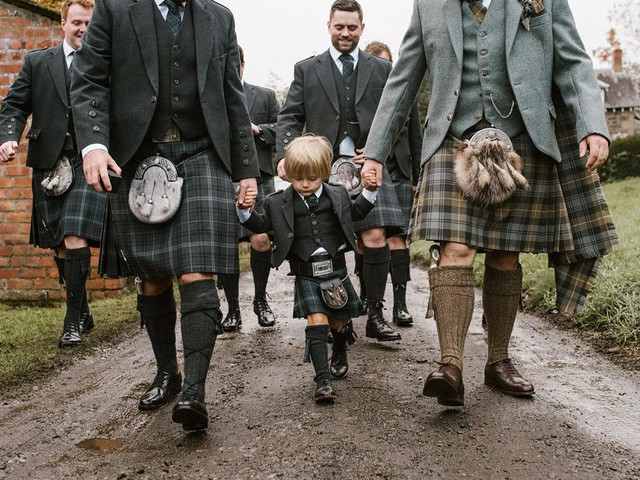
Famous Scottish Pattern
Scotland brings to mind breathtaking hills, the buzz of bagpipes, and rugged kilts. Yet, one thing sneaks under most people’s radar—a design called tartan. Tartan isn’t just stripes and colors; it tells stories, connects families, and shows pride in a way that hits deeper than looks alone. These bright checks have been around for hundreds of years, each one standing for a different clan or place. Fans of history, culture, or style get hooked on tartan because it blends art and identity like nothing else. Dig a little deeper, and you find surprising secrets hidden in every stripe—a secret code spun into cloth that keeps Scotland’s soul burning bright. If you want to really understand why tartan means so much, keep going; it’s a story you won’t forget.
Tartan is connected inseparably with Celtic culture, especially with Scottish one. This striped pattern is existing in this culture since the 3rd century. But some scientists state that it is even older as well as tartan as a product was designed thousands of years ago. In North America, it is called plaid but in Scotland, it generally suggests a tartan towel, a covering or one of the woollen blankets in a tartan pattern.
The name of it probably comes from the french word ‘tiretaine’ and also back then described a part woollen, component bed linen product. The first time when it was worried much more as a pattern than a material remained in the XVII century. It got likewise special suggesting the following century when the wonderful fight of Culloden took place. In this century the misconception that each clan has its own pattern became to live. Prior to that, the federal government pressure of the Highland Independent Companies presented a standard tartan picked to stay clear of association with any kind of certain clan.

After the battle, the routine of putting on tartan was prohibited in order to destroy the rebellious culture of the Scottish highlands. Tartans weren’t outlawed only for militaries. The business that end up being well known for generating the tartan not just for the military was William Wilson. The mass production of tartan led to a broad supply of constant patterns, as well as a concept to call the take after Scottish communities. This led to the idea that the tartan development come from specific parts of the land.
Nowadays tartans are signed up by clans, households, institutions. They normally differ in the number of red stripes as well as colours, however, the pattern is always the exact same: crisscrossed straight and also vertical bands.
Also, the pattern has great use in globe style to the highest degree. Famous people such as to be seen in tartan garments. Not only in timeless colours yet in pink possibly. Celebs like Paris Hilton and Victoria Beckham wore an extra updated version of the old mini- a knee-length tartan pencil skirt. And also they looked terrific! And also every time when “Braveheart” gets on TV the kilt hire the UK is increasing. Lots of people want to resemble Mel Gibson in its tartan rainbow kilt. Certainly, the truth is that if it comes to fashion it is a matter of preference. And some individuals don’t such as tartan garments as well as in a lot of cases they think that this is to Celdish wear.
Usually, make amusing of tartan trousers in a ladies variation. But I’m sure they wouldn’t have anything versus fragile lengthy or short wear tartan pattern. And those individuals are usually okay with males in kilts, not thinking about this item of garments as a skirt however even more vital item of cloth than trousers (not just Mel Gibson’s fans).